The Unmistakable Spirit of Lotus
When I think about automotive brands that truly define a unique philosophy, Lotus always springs to mind. It's a name that conjures images of nimble, agile machines, cars built with an unwavering dedication to driving dynamics over sheer horsepower. For me, that's what makes them so special. From its humble beginnings in a small lock-up garage to its current position on the global stage, Lotus has consistently pursued a singular vision: to create the ultimate driver's car. It isn't just about speed; it’s about the feel, the connection between driver, road, and machine. You see, while many manufacturers chased bigger engines and more luxurious interiors, Lotus carved out its niche by relentlessly focusing on lightness and handling.
We can trace this extraordinary journey back to one man, a true visionary whose impact on motorsport and automotive engineering is still felt today. That, of course, is Colin Chapman. His philosophy, often quoted as “Simplify, then add lightness,” wasn't just a marketing slogan; it was the bedrock of every car he conceived. It shaped their design, their construction, and their very purpose. And honestly, it’s a brilliant approach when you want to build a car that truly dances on the road. What a guy!
Colin Chapman's Enduring Philosophy
The Genesis of a Legend
Born in Richmond, Surrey, in 1928, Anthony Colin Bruce Chapman started Lotus Engineering Ltd. in 1952. Right from the get-go, his approach to car design was revolutionary. He believed that shedding weight was far more effective than simply boosting power. Think about it: a lighter car requires less power to accelerate, less powerful brakes to stop, and less robust suspension to manage its weight. This holistic thinking led to efficiency gains across the board. It's a wonderfully elegant solution to performance, isn't it?
His early creations, like the Mark VI and the Mark VII (the Seven, which Caterham still produces today), were stripped-back, minimalist machines designed primarily for racing. These cars weren't trying to be comfortable or opulent; they were pure instruments of speed and handling. And folks loved them! I think it really captured a spirit of genuine motoring enthusiasts.
Innovation on the Road
Chapman didn't just confine his genius to racing. The Lotus Elite, introduced in 1957, was a revelation. It was one of the first production cars to feature a fiberglass monocoque chassis, making it incredibly light and rigid. Then came the Lotus Elan in the early 1960s, a car that many, myself included, consider one of the finest handling sports cars ever made. It wasn't particularly powerful, but its precise steering, independent suspension, and incredibly low weight made it an absolute joy to drive. It's a classic example of how a relatively small engine can feel incredibly potent when it's not lugging around unnecessary mass. And you know, even today, an Elan looks absolutely gorgeous.
The Europa, with its distinctive mid-engine layout, further solidified Lotus’s reputation for innovative engineering. It brought the benefits of mid-engine balance to a more accessible price point, which was pretty groundbreaking at the time. I'm telling you, Chapman really pushed the boundaries.
Dominance on the Racetrack: Formula 1 Glory
While road cars were important, Colin Chapman's heart truly lay in Formula 1. Team Lotus became a powerhouse in F1 during the 1960s and 70s, winning seven Constructors' Championships and six Drivers' Championships. Drivers like Jim Clark, Graham Hill, Jochen Rindt, Emerson Fittipaldi, and Mario Andretti all tasted victory in Lotus machinery. What an incredible roster!
Chapman was a relentless innovator in F1, introducing groundbreaking technologies such as the monocoque chassis, aerodynamic wings, ground effect aerodynamics, and active suspension. Some of his designs were so far ahead of their time, they occasionally pushed the boundaries of what was deemed legal. But that was Chapman; always pushing, always experimenting. He wasn't afraid to try something radically different, and more often than not, it paid off handsomely. It’s a testament to his inventive spirit, isn’t it?
The Iconic Esprit and Beyond
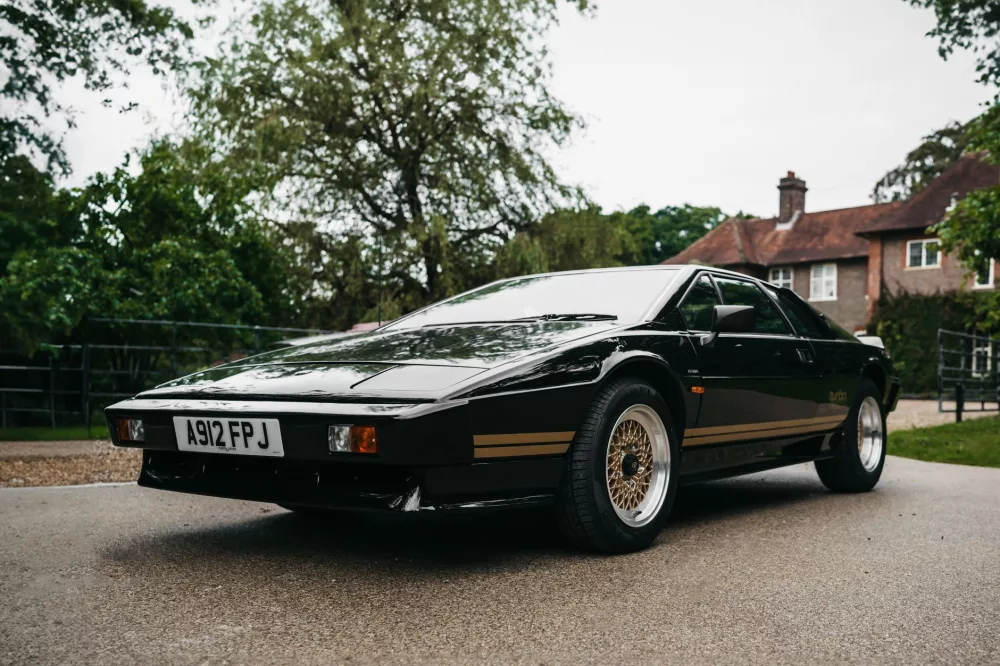
For many, the Lotus Esprit, first penned by Giorgetto Giugiaro and later refined by Peter Stevens and Julian Thomson, is the quintessential Lotus supercar. Its wedge shape was instantly recognizable, and its appearance in James Bond films (The Spy Who Loved Me and For Your Eyes Only) cemented its status as a pop culture icon. For years, the Esprit was the flag-bearer for Lotus, evolving through various iterations, including the turbocharged models that finally gave it the power to match its striking looks. I've always admired its distinctive style; it really stood out.
After Chapman's untimely passing in 1982, Lotus went through various ownerships and faced challenging times. However, the spirit of lightness and handling never faded. The arrival of the Elise in 1996 marked a glorious return to form. With its bonded aluminum chassis and minimalist approach, the Elise was a direct embodiment of Chapman's original philosophy. It was an absolute blast to drive, offering unparalleled feedback and agility. The Exige, essentially a more track-focused version of the Elise, took that raw driving experience even further. These cars were pure, unadulterated fun, and they really put Lotus back on the map for enthusiasts.
Modern Horizons: Evora, Emira, and the Electric Future
More recently, Lotus expanded its lineup with the Evora, a slightly larger, more refined 2+2 grand tourer that still retained that characteristic Lotus handling but with a greater emphasis on comfort and usability. It showed that Lotus could build a car with a broader appeal without sacrificing its core values. It was a nice step, I think, a way to attract a different kind of customer.
Today, under the ownership of Chinese automotive giant Geely, Lotus is embarking on its most significant transformation yet. We've seen the stunning all-electric Evija hypercar, a limited-production machine that showcases their future technological capabilities. It's an incredible statement of intent, demonstrating that extreme performance can indeed be electric.
Then there's the Emira, which is set to be the last gasoline-powered sports car from Lotus. It’s a beautiful tribute to their heritage, offering modern technology and comfort while still promising that legendary Lotus handling. I’m really excited about that one, it looks absolutely superb. But the biggest shift, and perhaps the most surprising, is the Eletre – an all-electric SUV. This vehicle marks a dramatic departure from Lotus's traditional low-slung sports cars, but it aims to bring the brand's core values of performance and agile handling to a new segment. It's a bold move, and I'm genuinely curious to see how it performs in the real world.
I believe that while the future of Lotus may look different, with electric powertrains and even SUVs entering the fold, the fundamental principles laid down by Colin Chapman will continue to guide them. The relentless pursuit of superior handling, aerodynamic efficiency, and smart engineering will, I hope, always be at the heart of every car bearing the Lotus badge. Because for me, that's what makes a Lotus a Lotus, and I wouldn't have it any other way.